Trump's Bitcoin Reserve Plan Hits a Wall: Who's Really in Control?
Trump’s Bitcoin Reserve Plan Hits a Wall: Who's Really in Control? In the ever-evolving landscape of cryptocurrency, former President Donald Trump’s ambitious Bitcoin reserve plan has run into a s...
Trump’s Bitcoin Reserve Plan Hits a Wall: Who's Really in Control?
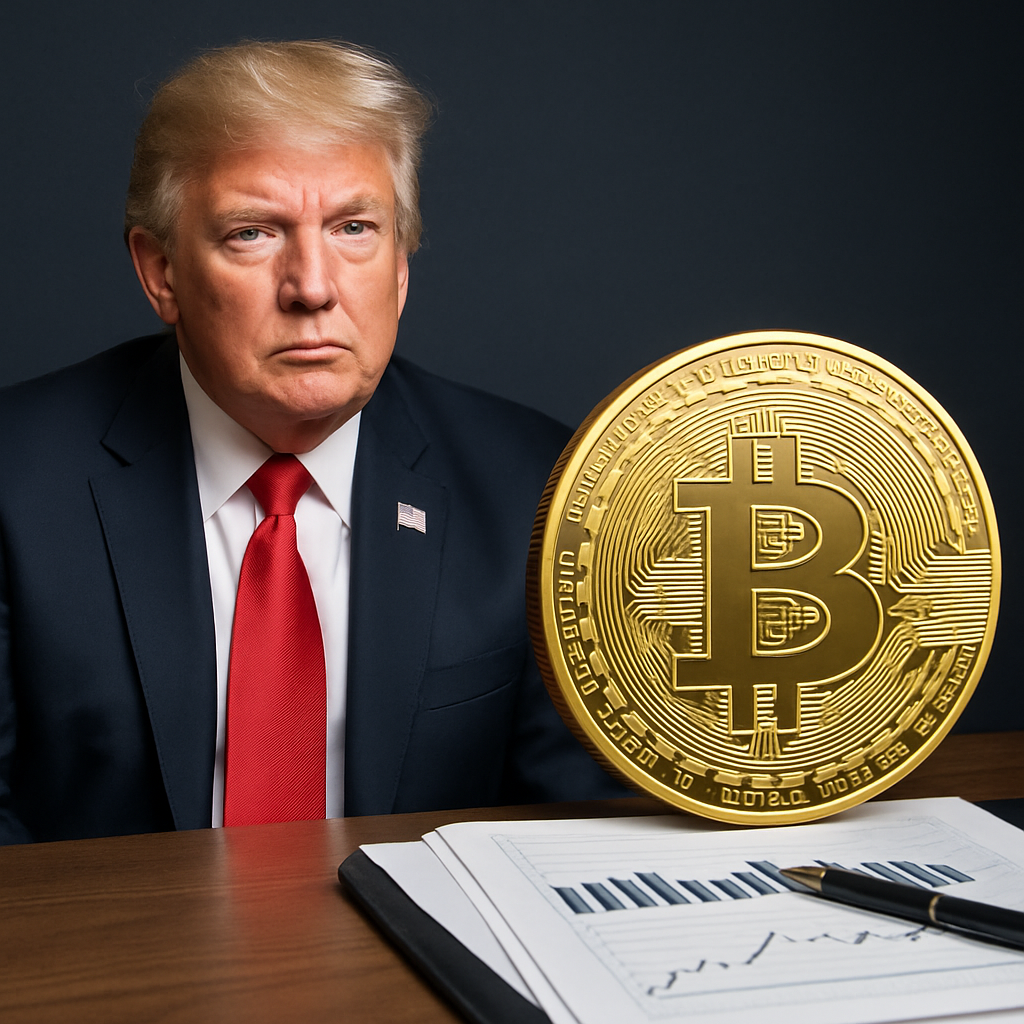
In the ever-evolving landscape of cryptocurrency, former President Donald Trump’s ambitious Bitcoin reserve plan has run into a significant roadblock. As reported by Bloomberg on July 6, 2026, the plan aimed to leverage seized Bitcoin as a reserve asset, but it has hit legal hurdles amidst a tug-of-war between government agencies. So, what’s going on? Let’s unpack this tangled web of bureaucracy and ambition.
A Bold Vision Meets Reality
Trump’s idea was audacious—transforming seized Bitcoin into a national reserve could have positioned the U.S. as a leader in the cryptocurrency space. This plan resonated with many of his supporters who view Bitcoin as a hedge against inflation and a means of financial independence. However, transitioning from a concept to a practical implementation is rarely straightforward, especially in the world of digital currencies.
The Seized BTC Dilemma
The crux of the issue lies in the Bitcoin that has been seized by various law enforcement agencies. The Treasury and Commerce departments are now locked in a debate over who ultimately controls these assets. It’s a classic case of government agencies stepping on each other’s toes—one is concerned with financial regulation, while the other is focused on commerce and innovation.
This clash raises a critical question: Who should dictate the future of Bitcoin reserves? Is it the Treasury, which has traditionally handled financial assets, or Commerce, which champions economic growth and technological advancement? This impasse highlights the broader uncertainty surrounding crypto regulation in the U.S. and the struggle to keep pace with an industry that moves at lightning speed.
Legal Hurdles and Regulatory Quagmire
As discussions stall, legal hurdles emerge. The regulatory framework surrounding cryptocurrency is still in its infancy, and agencies are grappling with outdated laws that don’t quite fit into the digital age. The lack of clarity leaves room for interpretation, which can lead to significant delays and complications.
For instance, how do you classify Bitcoin in the context of seized assets? Is it currency, property, or something entirely different? The ambiguity creates a quagmire that could stymie Trump's plan and leave the seized BTC languishing in legal limbo.
A Disjointed Crypto Strategy
The irony is palpable: while Trump’s vision of a Bitcoin reserve could have propelled the U.S. into a new era of financial innovation, the very agencies meant to facilitate progress are bogged down in red tape. This disjointed approach illustrates a broader problem in how the government is handling the rise of cryptocurrencies.
Inconsistent regulations can stifle innovation and prevent the U.S. from reaping the benefits that digital currencies can offer. Moreover, this internal conflict sends a discouraging message to investors and innovators, who may look elsewhere for more favorable environments.
The Bigger Picture: Control vs. Innovation
At the heart of this debacle is a fundamental question about control versus innovation. The tug-of-war between the Treasury and Commerce reflects a larger struggle within the government to adapt to a rapidly changing economic landscape.
While Trump’s plan may have been a step toward embracing the future of finance, it’s clear that without cohesive strategies and a unified vision, efforts like these can quickly stall.
Conclusion: A Call for Clarity and Cohesion
As Trump’s Bitcoin reserve plan stalls amid agency debates, it highlights the urgent need for clarity and cohesion in the regulatory landscape surrounding cryptocurrencies. The U.S. must find a way to streamline regulations and foster an environment conducive to innovation.
If the government can’t get on the same page, it risks losing its competitive edge in the global digital economy. For now, Trump's ambitious vision remains in limbo, a mere whisper of what could have been, while agencies grapple with who’s really in control of the future of Bitcoin reserves.
In the ever-shifting sands of cryptocurrency, one thing is certain: the world will be watching closely as this saga unfolds.
Related Reading



This article is for informational purposes only and does not constitute financial advice.