Crypto's New Era: Institutional Push Amid DeFi's Identity Crisis
```html Crypto's New Chapter: From DeFi to Onchain Finance Crypto's New Chapter: From DeFi to Onchain Finance DeFi's Identity Crisis: The Shift to Onchain Finance Renowned DeFi architect Andre Cronje recently declared DeFi "dead" in spirit, suggesting that what was once a decentralized dream has become more akin to "on
Crypto's New Chapter: From DeFi to Onchain Finance
DeFi's Identity Crisis: The Shift to Onchain Finance
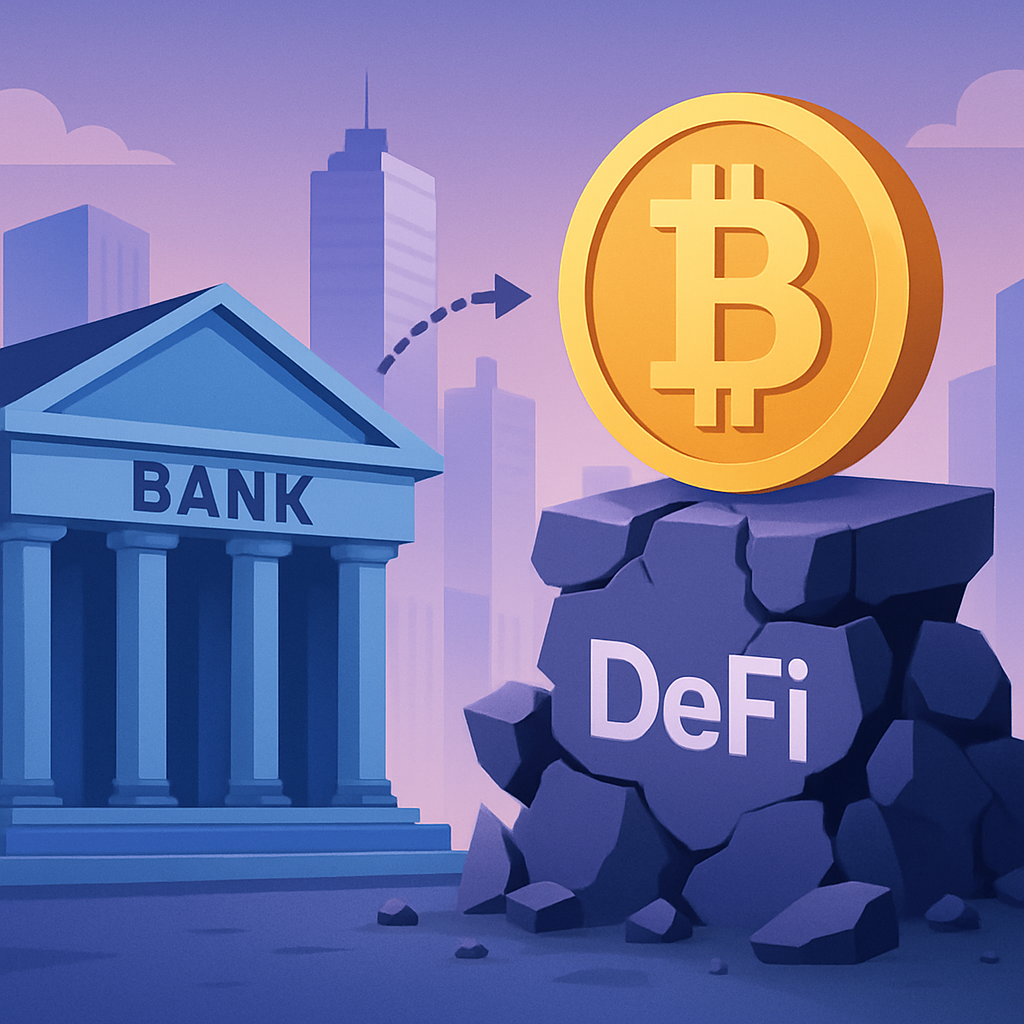
Renowned DeFi architect Andre Cronje recently declared DeFi "dead" in spirit, suggesting that what was once a decentralized dream has become more akin to "onchain finance." This evolution sees protocols now controlled by companies and governance votes, moving away from the cypherpunk ethos toward a more corporate model. As top DeFi protocols by TVL decreases and governance-heavy protocols gain traction, Cronje's observations spark a crucial question: Is this still decentralization, or merely fintech on a blockchain?
Regulatory Ambiguity and Institutional Inroads
The regulatory landscape remains murky with the SEC postponing its "Reg Crypto" meeting and delaying major rule proposals. This leaves startups and token issuers in a limbo, operating in legal gray zones and ramping up legal defenses. Despite this uncertainty, major financial institutions are deepening their crypto engagements. Morgan Stanley and JPMorgan are expanding crypto ETF holdings, while Citigroup's CEO is actively advocating for stablecoin legislation, signaling a growing institutional acceptance of digital assets.
- Morgan Stanley increases exposure to XRP ETFs.
- JPMorgan enhances Bitcoin ETF positions despite market volatility.
- Citigroup seeks clear regulatory frameworks for stablecoins.
Technological Advances and Security Concerns
Bitcoin's spotlight shifts to security as AI systems uncover nearly 8,000 potential software vulnerabilities. A coalition of crypto firms is advocating for pre-release AI tools to bolster defenses. Meanwhile, Ethereum makes a strategic pivot by replacing the Poseidon hash function with more familiar cryptographic hashes, enhancing its long-term security and interoperability. These developments underscore a commitment to robust security measures in the crypto space.
Key Takeaway: The crypto landscape is transitioning into a more structured, regulated environment. While the spirit of DeFi may have evolved, the industry remains dynamic, with institutions seeking clarity and protection, and technology driving forward security innovations. This new chapter in crypto is less about wild experimentation and more about sustainable growth.
Related Reading



This article is for informational purposes only and does not constitute financial advice.